Cultural Heritage
Division
Isolcell researches, designs and develops solutions for the conservation and pest treatment of artistic and cultural heritage. To protect this delicate heritage, the division uses atmosphere control systems with fixed and mobile stations that reduce oxygen levels by introducing inert nitrogen.
Gates of Paradise
Florence Cathedral
Cimabue’s Crucifix
Arezzo
Ötzi
South Tyrol Museum of Archaeology, Bolzano
Case studies
Protecting fine art
Isolcell researches, designs and develops solutions for the conservation and pest treatment of artistic and cultural heritage.
To protect this delicate heritage from the effects of time, air and pests, the division uses atmosphere control systems with fixed and mobile units that reduce oxygen in favour of inert nitrogen, eliminating harmful insects and microorganisms. This natural, non-polluting treatment uses no toxic substances and preserves even the most fragile materials intact. Continuous monitoring ensures effectiveness, safety and respect for the authenticity of the works treated.

Conservation of the Gates of Paradise in a modified atmosphere
Florence Cathedral
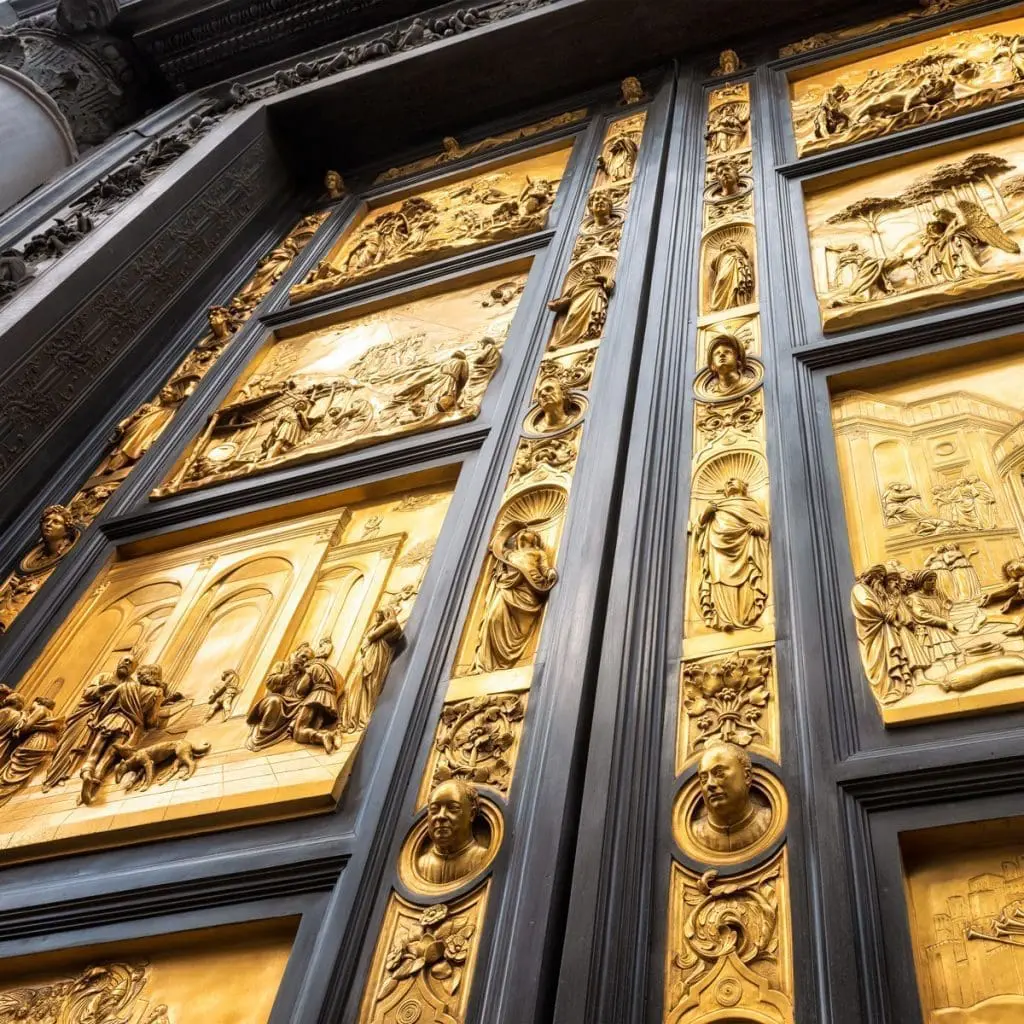
Our cultural heritage projects include the conservation in a modified atmosphere of the Gates of Paradise, the celebrated gilded bronze doors of the Florence Baptistery. This masterpiece by Lorenzo Ghiberti is now displayed at the Museo dell’Opera del Duomo. For a work of such value and delicacy, the challenge was to protect the gilded surface over the long term from environmental agents of deterioration: oxygen, humidity and airborne pollutants, which cause oxidation and changes to gilded metals over time.
We applied our expertise in controlling atmospheric parameters to create a conservation environment with a gas composition different from natural air, reducing oxygen and slowing the physical and chemical deterioration of the gilding. This project demonstrates how technologies developed for industry can serve the protection of Italy’s artistic heritage, preserving it over time without altering its original integrity.

Pest treatment
of Cimabue’s Crucifix
Arezzo
In 1997, we applied our controlled atmosphere technology to one of the masterpieces of Italian art: Cimabue’s Crucifix, housed in the Basilica of San Domenico in Arezzo. Anobiid beetles were attacking and damaging its wooden support. The challenge was to eliminate the infestation without using chemicals that could endanger such an ancient work. We saturated the environment with high-purity nitrogen, reducing oxygen until the larvae died from anoxia, without any alteration to the wood or paint.
Carried out with the Soprintendenza di Arezzo and scientifically validated by the CNR Institute for Wood Research in Florence, this was one of the first applications of the technology to cultural heritage. It has since become part of our history in conserving artistic heritage, alongside projects such as the Gates of Paradise in Florence.
News
Controlled atmospheres in the service of cultural heritage
Isolcell, a benchmark in generated, modified and controlled atmospheres for over sixty...
Innovation and research: the added value for conservation
With more than 33 international patents, collaborations with universities and research centers,...
Chemical-free pest eradication: nitrogen protects art
Protecting a work of art from insect pests without altering its materials...