Over 65 years
of experience
From pioneers
to international
technology leaders
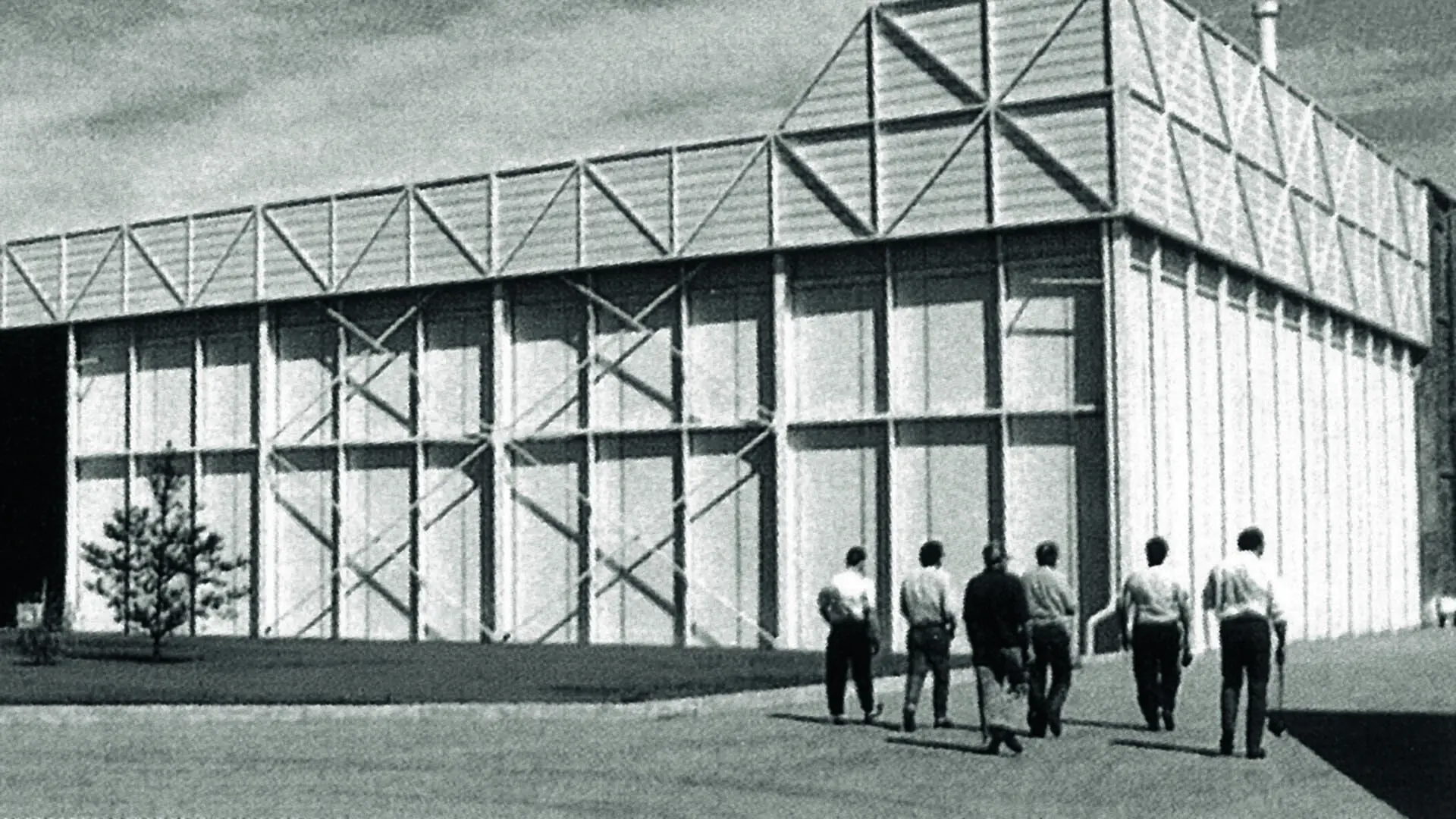
Founded in Bolzano in 1958, Isolcell is an ISO 9001-certified company with over 65 years’ experience in controlled-atmosphere technology. We began by making the first gas-tight cold rooms, gradually expanding our focus from containing atmospheres to generating and controlling them.
One of Isolcell’s strengths is its ability to manage the entire process in-house, from design and engineering to production at our headquarters. This integrated approach allows us to deliver reliable, high-quality systems tailored to customers’ needs.
Our history is closely intertwined with the development of controlled-atmosphere technology. Experience gained over the years underpins continuous improvement and innovative solutions.
Designed around market needs, our technologies help set new benchmarks for performance, safety and efficiency.
Our history is closely linked to advances in storage technology and changing market requirements.
1950 – 1969
1958
Isolcell is founded in Bolzano. We begin building the first controlled-atmosphere rooms for apples and pears in Trentino–South Tyrol. The earliest gas-tight cold rooms use bitumen-coated aluminium sheets bonded to polystyrene panels. We introduce manual volumetric O₂ and CO₂ gas analysis using the ORSAT method. By 1960 we achieve an industry breakthrough by sealing cold rooms with glass-fibre-reinforced polyester resin.
1961
We become the exclusive representative of the first heat-regenerated diethanolamine carbon dioxide scrubber, made by Britain’s Hall Thermotank. Two years later we begin producing it under licence. Building on these early successes, we export our technologies across Europe, country by country.
1963
By 1963 we develop and offer the first CO₂ scrubbers using a potassium carbonate solution.
1965
In partnership with the Swiss company Sulzer, we develop the first cold-regenerated activated-carbon CO₂ scrubber. It transforms CO₂ adsorption technology, and its operating principle still underpins modern scrubbers.
1969
Isolcell conceives DEOXO, a catalytic combustion converter to lower oxygen levels in fruit storage rooms.
1970 – 1979
1970
We refine our catalyst technology and improve its efficiency, developing an open-cycle propane combustion system called ISOGEN. We are the first in Italy to use prefabricated steel-polyurethane-steel panels for controlled-atmosphere cold rooms. We also develop Isolcoat, an innovative acrylic resin with high elasticity and mechanical strength. Easy to apply, it becomes the de facto standard for gas-tight sealing in cold rooms and other environments.
1972
We develop the first electronic ultrasonic and paramagnetic analysers for carbon dioxide and oxygen. We introduce automation of controlled-atmosphere plants in Europe using electromechanical programmable control panels. We move to our present headquarters in Laives.
1978
We are the first in Europe to use low-oxygen atmospheres to disinfest food products without chemicals, creating a method that becomes the standard for environmentally friendly pest control.
1980 – 1989
1980
In the early 1980s we add a CO₂ removal unit downstream of combustion in our ISOGEN nitrogen generators. This creates the first combustion generator producing nitrogen free from residual carbon dioxide: NITROGEN.
1982
We bring to Europe a new American air-separation technology for nitrogen generation: the N2 Separator, the first hollow-fibre nitrogen generator based on molecular filtration. We pioneer ULO (Ultra Low Oxygen) storage for fresh fruit, with extremely low oxygen levels that triple its storage life. As personal computers emerge, we build the first fully electronic monitoring and control systems for controlled-atmosphere plants.
1984
We are the first in the world to apply controlled-atmosphere technology to sea transport of fresh fruit. Isolcell begins making its first molecular-sieve nitrogen generators using PSA (Pressure Swing Adsorption) technology.
1990 – 1999
1990
Following the success of our PSA generators, we redesign the range to be modular and scalable. We patent an innovative nitrogen-based method for regenerating CO₂ scrubbers, preventing waste oxygen from the regeneration process entering cold rooms. The Italian State Monopolies choose our technology to remove tobacco pests without chemicals; we pioneer environmentally friendly tobacco disinfestation in Italy.
1994
Using the patented VSA (Vacuum Swing Adsorption) method, we build our first low-pressure, energy-efficient molecular-sieve nitrogen generators. We also begin offering nitrogen generators to the wine industry.
1998
We develop and patent ADOX, the first oxygen scrubber and an evolution of VSA. It remains unmatched worldwide for energy efficiency and is the preferred solution for applications requiring highly efficient oxygen reduction in enclosed spaces.
2000
2000
We expand the ethylene scrubber range with DEOXYL L.E. (Low Energy), designed to cut the energy needed for ethylene removal dramatically.
2001
For the Bolzano Archaeological Museum (Ötzi), we develop the concept of total protection for historical and artistic artefacts. The first protective-atmosphere display cases control temperature, relative humidity and residual oxygen while also reducing dust and bacteria inside.
2003
We become the exclusive global distribution partner for a revolutionary technology developed by the Canadian government and introduce D.C.A. (Dynamic Controlled Atmosphere) to fresh fruit storage. We establish our Industry Division.
2005
We establish the Fire Prevention Division and launch N2 FIREFIGHTER®, introducing oxygen depletion to protect spaces, people and assets.
2009
After four years of certification, Isolcell obtains European certification for its N2 FIREFIGHTER® technology and recognition as an authorised manufacturer and installer of safety systems.
2012
We refine the control of PSA generators and patent staggered-bank operation, which allows partial operation, reduces consumption and improves the uniformity of the nitrogen flow.
2013
We develop GEN2ION, an innovative low-oxygen painting system that significantly reduces industrial painting costs while improving surface quality.
2015
We present DAN2TE (Dynamic Atmosphere Nitrogen Treatment Equipment), an integrated system for disinfesting and preserving artworks, to the museum and cultural-heritage sector.
2016
We introduce the new ADOX® N2 ORS range: modular, highly customisable systems designed specifically for fire prevention.
2018
We introduce new technologies developed exclusively for oxygen-reduction fire prevention in accordance with the VdS Directive and launch the new brand N2 Oxygen Reduction System®.
2019
We improve ADOX®machines with acoustic enclosures that significantly reduce noise from 90 to < 64 dB(A) (ISO 3744:2010 certified).
2020
TÜV certifies our oxygen sensors, control panel, ADOX®, distribution valves and I/O modules to SIL-3 IEC 61508 safety level.