



Refrigeration
for fruit
storage
Direct and indirect solutions to preserve weight, firmness and quality during storage
Isolcell designs and builds complete fruit refrigeration systems to maintain optimal conditions throughout storage and preserve product quality, freshness and characteristics over time. Depending on the project, fruit variety, storage temperatures and system features, Isolcell offers both direct and indirect refrigeration, selecting the most suitable solution for each application.
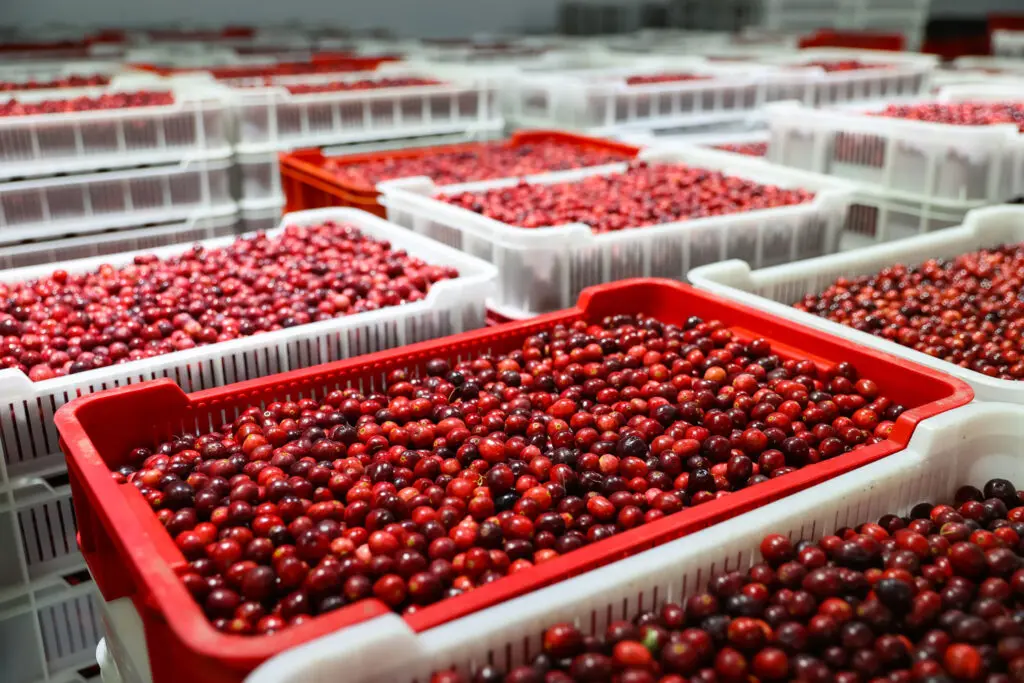
Indirect refrigeration:
quality, safety and flexibility
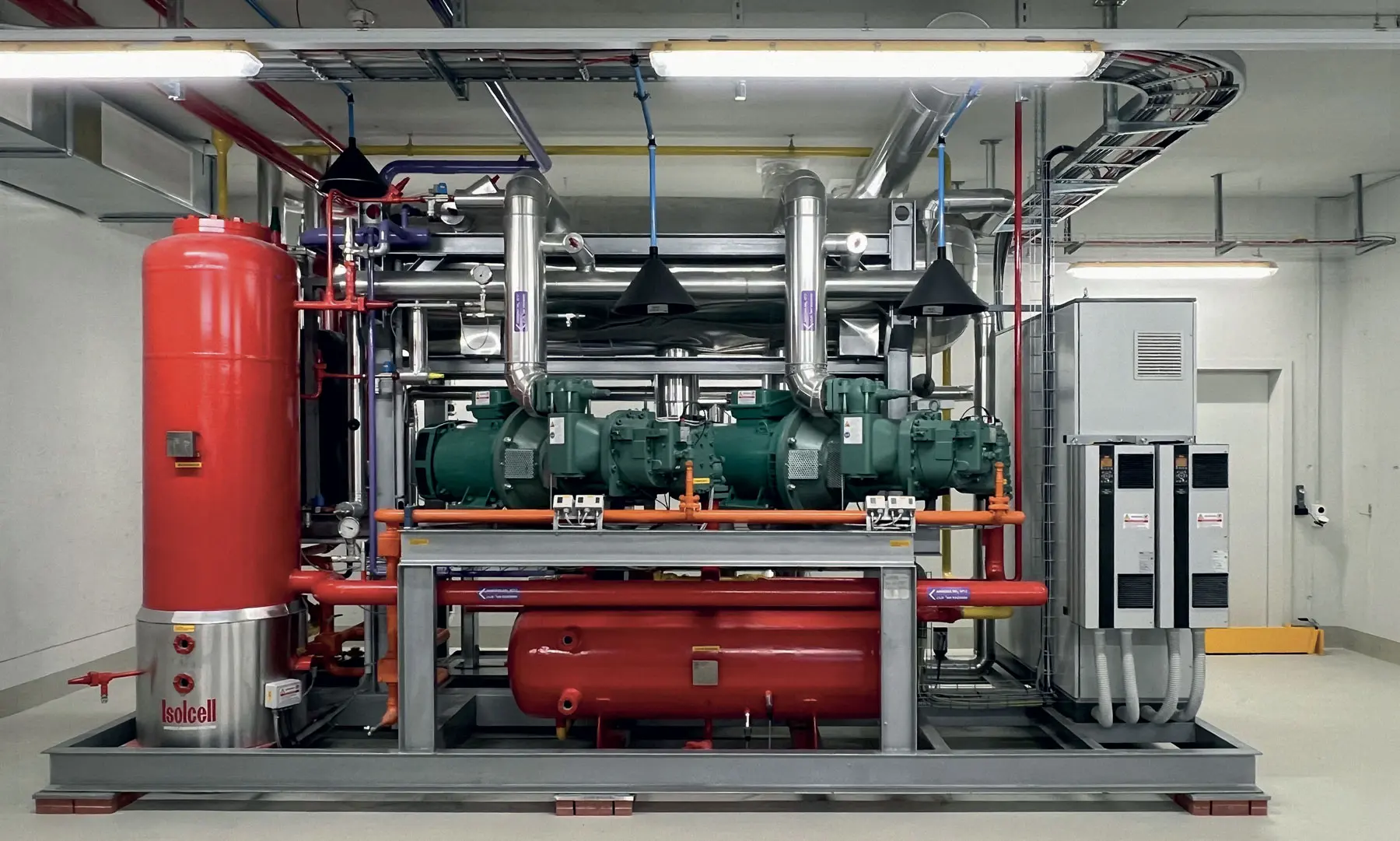
In indirect refrigeration, the primary refrigerant is used in the central plant to cool a water-and-glycol mixture, which is then distributed to the storage rooms and other users.This configuration reduces the primary refrigerant charge and concentrates it mainly in the plant room, limiting its presence in storage areas. It is particularly flexible for centralised facilities with many rooms.Depending on the project and its objectives, Isolcell develops solutions using ammonia (NH₃), CO₂ or propane, selecting the most appropriate technology for each system.
High humidity to preserve fruit weight and quality
A major benefit of indirect refrigeration is the ability to operate with a small temperature difference (ΔT) between storage-room air and the heat exchanger surface. A small ΔT limits moisture condensation on the evaporator and maintains particularly high relative humidity in the rooms. This reduces fruit dehydration during long storage periods.
The result is less weight loss, better preservation of firmness and appearance, and higher fruit quality at the end of storage.
For growers and storage facilities, reducing weight loss also means retaining more marketable fruit.
Cooling
Larger ΔT | → | greater cooling capacity | → | faster cooling |
Storage
Smaller ΔT | → | less dehumidification | → | higher RH | → | less weight loss | → | better quality |
The advantages of
indirect refrigeration
Indirect water-glycol system | Direct system | |
Refrigerant charge | Reduced and concentrated in the plant room | Distributed through the refrigerant circuit |
Relative humidity | Can operate with small ΔT values, supporting high RH | Depends on evaporator sizing and operating conditions |
Fruit weight loss | Reduced through less product dehydration | Depends on evaporation conditions and ΔT |
Quality at the end of storage | Particularly favourable for maintaining weight, firmness and quality | Depends on system design and operation |
Safety | Primary refrigerant mainly contained in the plant room | Refrigerant also present near end users |
Flexibility | High, particularly suitable for multi-room facilities | Refrigerant circuits connected directly to end users |
Control | Flexible fluid-temperature control according to the cooling or storage phase | Control directly on the refrigerant circuit |
Expansion and maintenance | Simplified by centralisation of the primary circuit | Require work on the refrigerant circuit |
Environmental impact | Reduced | Higher |

Intelligent
circuit control
Modulating three-way valves distribute the water-glycol mixture to each room and precisely control the temperature of the fluid entering the heat exchanger according to the cooling and storage phase. At the start of cooling, a lower fluid temperature removes heat quickly. Once the storage temperature is reached, the controls can maintain a small temperature difference (ΔT) between room air and the exchanger surface, limiting dehumidification and supporting high relative humidity. This flexibility delivers maximum cooling capacity when fruit must be cooled quickly and gentler conditions during storage to reduce dehydration and weight loss while preserving quality.
An integrated solution
for storage
Refrigeration is essential to proper fruit storage. Isolcell therefore combines cooling production, distribution, regulation and control in one project tailored to the product and facility. Integrating refrigeration, temperature control, high relative humidity and controlled-atmosphere technologies reduces weight loss and preserves fruit freshness, firmness and quality for longer.